
August Beekeeping Guide
Harvest your honey. Get ahead of mites. Start preparing for winter.
For many of us in Utah, August marks the end of the main honey flow. The excitement of spring is behind us, and now it's time to shift our focus.
The bees are already preparing for winter.
From this point on, nearly every management decision you make should answer one question:
"Will this help my colony come through winter stronger?"
August is the month to harvest your honey, reduce mite levels, and make sure your colonies have the resources they need to raise healthy winter bees.
Items Needed This Month
- 2:1 sugar syrup (feed after honey supers are removed)
- Mite testing kit
- Testing cup
- Soap solution
- ½-cup measuring scoop
- Container for collecting bees
- Mite treatment options (if needed)
- OAE (Oxalic Acid Extended Release)
- Formic Pro (Formic Acid) if temperature permits
- Or another approved treatment of your choice
- Entrance reducer
Start Preparing for September
- Formic Pro or preferred mite treatment
- 1–2 gallons of 2:1 syrup
- 2 lbs. pollen supplement
- Mite testing kit
What You Should Be Doing Every Inspection
Inspect every 14 days.
You're checking for:
- Eggs (the queen is still laying)
- A healthy brood pattern
- Pearly white, moist larvae
- Honey and pollen stores
- Overall colony strength
- Signs of disease or stress
By now the colony should still be relatively strong.
If population begins dropping quickly, don't assume it's normal.
Look for:
- High mite levels
- Queen problems
- Disease
- Lack of nutrition
The sooner you find the cause, the easier it is to correct.
Honey Harvest
For most Utah beekeepers, honey harvest happens around mid-August.
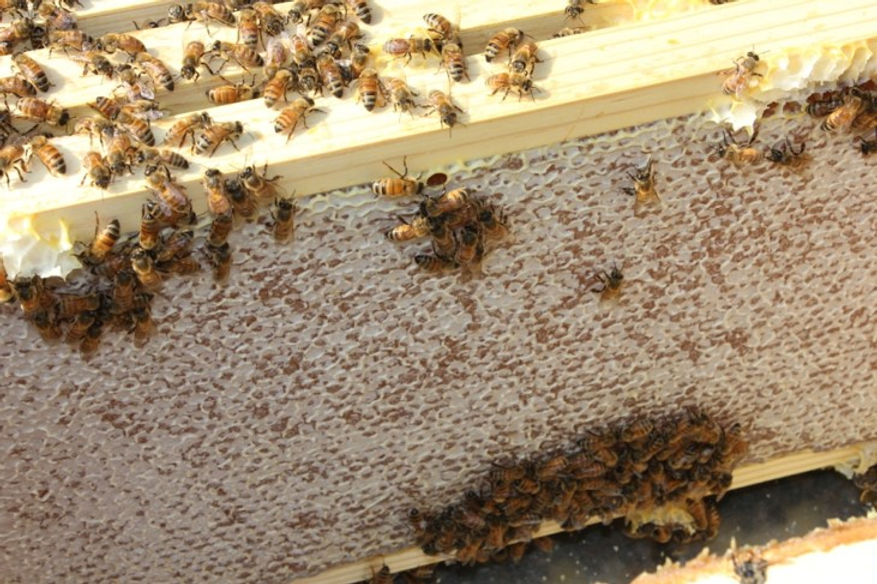
Your honey super should be mostly full before harvesting.
As a general rule:
👉 Honey frames should average about 75% capped before extraction.
That usually puts the moisture content below about 17%, helping prevent fermentation during storage.
Extract While Honey Is Still Warm
Warm honey flows much easier through an extractor.
If you wait until cool fall temperatures arrive, extraction becomes slower and much more difficult.
If possible, extract within a day or two of removing your supers.
Let the Bees Clean the Frames
After extracting:
Place the wet honey super back on the hive for 24 hours only.
The bees will clean out the remaining honey quickly.
Don't leave extracted frames outside.
Doing so invites robbing and can create a frenzy around your apiary.
Storing Drawn Comb
Once the bees have cleaned the frames:
You have several good options.
Freeze the frames
Freezing for a couple of days kills wax moth eggs and larvae before storage.
Use a biological wax moth treatment
Products such as:
- Certan B402
- XenTari DF
can help protect stored comb from wax moth damage.
Always follow the product label.
Store with plenty of light and airflow
Wax moths prefer dark, undisturbed spaces.
If freezing isn't practical, store supers where they receive plenty of light and air circulation until colder temperatures naturally control wax moth activity.
Hive Configuration After Honey Harvest
Once the honey super is removed, your hive should start looking more like its winter setup.
Upper brood box
Ideally you should see:
- Honey on outside frames
- A good honey band above brood
- Plenty of room remaining for the queen to continue laying
If the upper brood box becomes completely plugged with honey, the queen can run out of laying space.
If necessary:
Harvest or remove a couple honey frames and replace them with drawn comb.
The goal is to balance winter food stores while keeping brood production going.
Lower brood box
The bottom brood box should still contain:
- Brood in the center
- Honey on outside frames
- Space for continued brood production
Begin Feeding Again?
Once honey supers are removed:
Feed approximately one gallon of 1:1 syrup if additional stores are needed.
If you nectar flow is over, then this will stimulate the bees to keep raising brood. Keep an eye on them because we don't want them to burn through there winter stores.
Reduce the Entrance
By late August, robbing pressure usually starts increasing.
You'll often notice:
- Yellow jackets
- Wasps
- Other honey bees investigating entrances
Reduce the entrance to a medium opening once robbing pressure begins.
A smaller entrance is much easier for the colony to defend.
Mite Management
This is one of the most important mite treatments of the year.
Don't treat because the calendar says to.
Treat because your mite counts tell you to.
Test during early to mid-August.
At Homer's Honeybee, we use 1% (3 mites per 300 bees) as our target. If a colony tests above that level, we take action rather than waiting for the mite population to climb.
Treatment Options
Many beekeepers use:
- OAE (Oxalic Acid Extended Release) if mite populations are below threshold and need a control treatment
- Formic Pro (Formic Acid) temperature permitting)
- Apiguard
- Another approved treatment appropriate for the season
One advantage of Formic Pro is that it can be used while honey supers are still on the hive, provided temperatures remain within the product's recommended range.
Always read and follow the product label, especially temperature requirements.
Looking Ahead: Preparing for Winter
August is when your winter colony really begins taking shape.
The bees being raised over the next several weeks are the bees that will carry the colony through winter.
Healthy winter bees come from:
- Healthy queens
- Low mite levels
- Good nutrition
- Plenty of stored food
If you stay ahead of those four things, you're setting your colony up for success long before cold weather arrives.
August Checklist
All Hives
- Inspect every 14 days
- Harvest honey
- Test for mites
- Treat if needed
- Watch brood quality
- Monitor food stores
- Reduce entrances as robbing begins
After Honey Harvest
- Remove honey supers
- Extract honey while it's warm
- Return wet supers for 24 hours
- Store drawn comb properly
- Begin feeding 2:1 syrup if needed
- Begin feeding pollen patty supplement if needed
Looking Ahead
- Prepare for September feeding
- Continue monitoring mite levels
- Make sure the queen still has room to lay
- Focus on raising healthy winter bees
Winter Readiness Check
Before closing the hive today, ask yourself:
✓ Is my queen still laying a strong brood pattern?
✓ Have I tested for mites this month?
✓ Does the colony have enough food to continue raising brood?
✓ Am I building healthy winter bees—not just storing honey?
If you can answer yes to those questions, your colony is on the right track heading into fall.
Final Thought
August is where the season quietly changes.
The honey harvest may be winding down, but your work as a beekeeper isn't.
What you do over the next couple of months will have a greater impact on winter survival than almost anything you did during the spring.
Stay ahead of mites.
Keep your queen productive.
Make sure your bees have the food they need.
Do those things well, and you'll give your colonies their best chance of coming through winter strong.
Keep your Hive Alive.